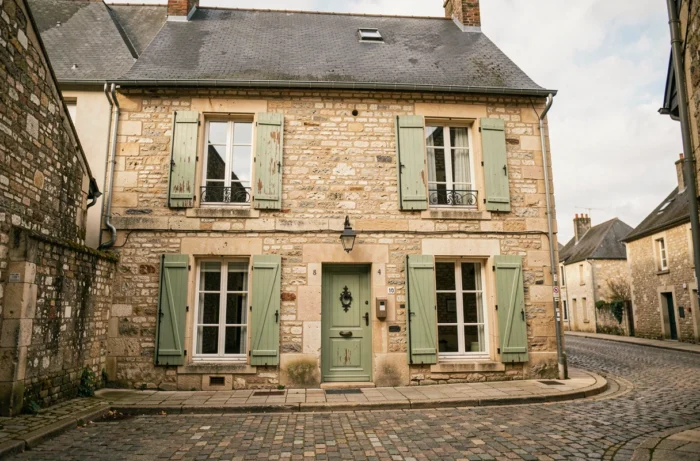
A terraced house, aligned with the street, with a small garden at the back and exposed stone walls: this is what a village house refers to. This type of property is distinctly different from suburban bungalows or isolated country houses. Located in the heart of a village or small town, it combines proximity to shops with old architectural charm, but also imposes constraints that many buyers underestimate.
Humidity and ventilation: the real test before buying a village house
Before discussing budget or decoration, one point deserves full attention: the condition of the walls and ventilation. Village houses are often built of stone, with facades directly facing the street. This configuration encourages rising damp and moisture accumulation.
Poorly designed interior insulation can worsen the problem. If the insulation blocks vapor exchange, moisture remains trapped in the walls. Signs of efflorescence, persistent odors, or peeling paint at the bottom are all warning signals.
Before any renovation plans, check the ventilation, joinery, and load-bearing walls. A moisture diagnosis carried out by a professional will complement the energy performance diagnosis (DPE) and prevent discovering hidden issues after signing. To learn everything about village houses, their construction specifics, and their positioning in the real estate landscape, this technical assessment remains the first step.
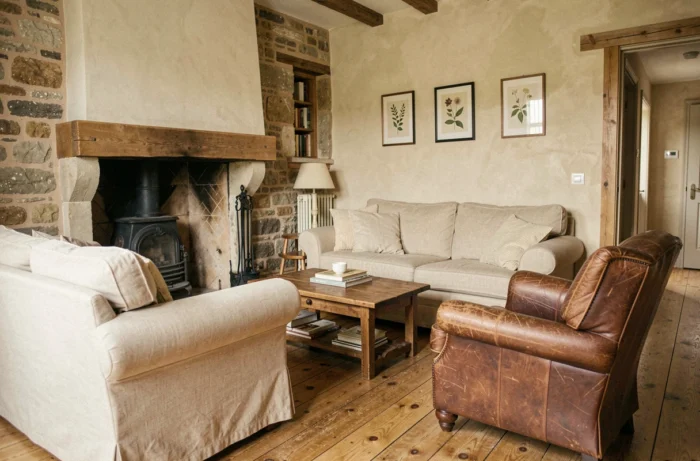
DPE and energy renovation of an old stone house
Energy performance has become a determining criterion, not only for comfort but also for the property’s value at resale or rental. Many village houses have a DPE rating of F or G, which has concrete consequences.
Mandatory energy audit for thermal sieves
The sale of a property rated F or G must be accompanied by a regulatory energy audit. This document proposes several costed renovation scenarios. The DPE alone is not sufficient to estimate the renovation budget. Always request this audit before committing to a purchase agreement.
Financial aid focused on energy-intensive housing
The conditions for MaPrimeRénov’ have been refocused on the most energy-intensive homes and comprehensive renovations. If the house you are targeting is rated E or better, the aid will be more limited. However, for a property rated F or G, the amounts remain significant, provided you use certified companies.
Are you considering a rental investment? Check the DPE before any profitability projections, as the worst-rated properties are subject to progressive rental restrictions.
Heritage constraints on facades and roofs in village centers
Buying a village house also means dealing with the existing built environment. Unlike a free plot on the outskirts, external modifications are not always at your discretion.
In a remarkable heritage site or near a historical monument, changes to facades, roofs, joinery, or even colors may require prior declaration. The architect of the Buildings of France must sometimes give their approval, which extends timelines and restricts material options.
Specifically, replacing wooden shutters with PVC or installing external insulation with modern rendering may be refused. This regulatory framework protects heritage but requires you to check urban planning easements before signing. The town hall and the local urban plan (PLU) are the primary sources to consult.
- Inquire about the existence of a protection perimeter around a historical monument.
- Consult the PLU to know the prescriptions regarding materials, colors, and types of joinery allowed.
- Anticipate processing times if approval from the architect of the Buildings of France is required.
Village house or country house: concrete choice criteria
Why choose a village house rather than an isolated house in the countryside? The answer depends on your lifestyle, but some differences deserve to be clearly stated.
The village house offers immediate access to shops, schools, and services. No need to take the car to buy bread. This proximity comfort also reduces daily commuting costs, a often underestimated expense.
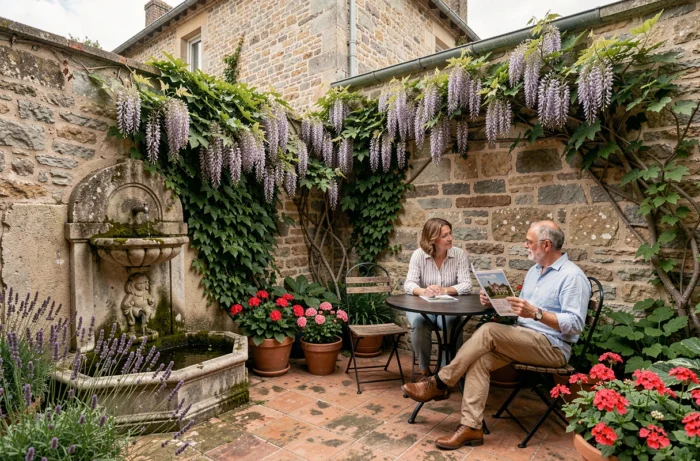
However, the land is smaller. The garden, when it exists, is usually at the back, bordered by neighboring properties. Being terraced requires special attention to sound insulation. Before buying, visit the property at different times to assess the actual noise level.
- The price per square meter is often more accessible than in the city, but higher than in the countryside for an equivalent area.
- Connection works (water, electricity, sanitation) are generally already completed, avoiding sometimes heavy development costs.
- Resale is facilitated by the proximity of services, a strong argument in the current real estate market where buyers seek a balance between tranquility and practicality.
A final often overlooked point: the village house ages with its village. If the village loses its shops and public services, the property’s value follows the same trajectory. Inquire about local dynamics, development projects, and the municipality’s demographics before making a decision.
Buying a village house remains a relevant choice when the fundamentals are met: a sound structure, a controlled DPE, identified heritage constraints, and a village that retains its services. The attractive purchase price should not obscure the real cost of renovation, especially on old stone walls where each intervention requires a tailored approach.