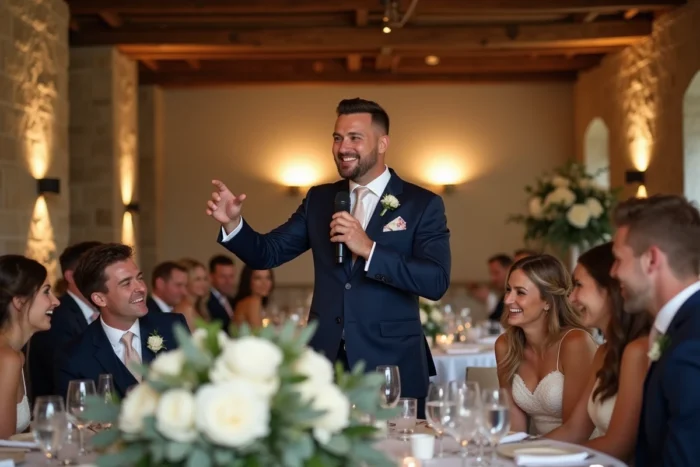
Wedding entertainment is a significant part of the perceived success by guests. The choice of activities, their sequence, and their accessibility determine the atmosphere much more than the decoration or the menu.
Feedback from French wedding planners has pointed to a clear shift since mid-2025: participatory and multigenerational formats are taking precedence over passive animations like the classic photobooth, according to the French Wedding Planners Association (AFWP) in its study “Wedding Animation Trends 2025-2026” published in February 2026.
Accessibility of animations for guests with reduced mobility
Most lists of animation ideas circulate without ever mentioning accessibility constraints. An outdoor escape game on uneven terrain, a game of the 12 months based on a musical chairs race, an elevated dance floor: these formats effectively exclude guests in wheelchairs or with reduced mobility.
Adapting an animation does not require replacing it. An interactive quiz on a smartphone, for example, works from any position. A collaborative mural installed at a variable height (adjustable easel or canvas placed on a low table) allows everyone to participate. Recycled wooden games, like giant Jenga placed on a stable table, offer an alternative to ground-level games.
- Check that the reception venue has access ramps and suitable restrooms before planning outdoor animations
- Plan at least one seated activity (quiz, calligraphy workshop, audio guestbook) for each key moment of the day
- Place animation spaces on flat, hard surfaces, not on grass or gravel
- Communicate in advance with the concerned guests to understand their specific needs
Considering accessibility from the design stage of the program avoids last-minute adjustments, which are often clumsy. An inclusive wedding does not cost more; it is thought of differently.
To explore a wide range of formats adaptable to your reception, you can succeed in the animation with Wedding News by browsing their suggestions categorized by time of day.
Acoustic standards and outdoor musical animations since 2026
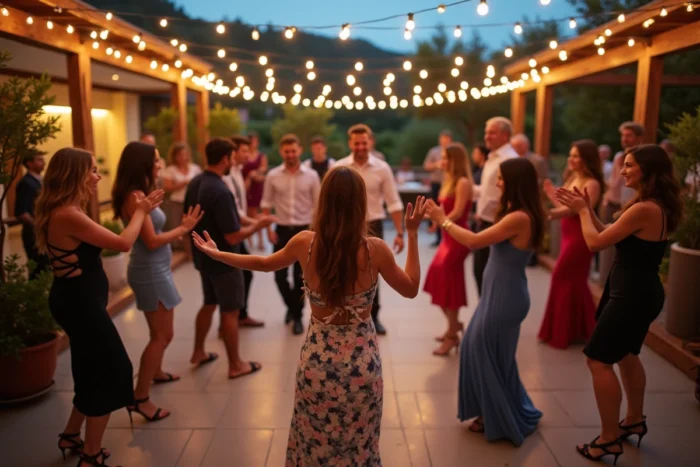
Since January 2026, French regulations impose stricter acoustic standards for outdoor musical animations. Providers must limit decibels after 10 PM, which significantly changes the planning of the evening.
This constraint encourages the emergence of so-called “low-noise” DJs, capable of maintaining a festive atmosphere at a controlled volume. Silent disco headphones are gaining ground as a workaround, but their rental cost remains variable depending on the regions.
For couples planning an outdoor wedding, the timing question becomes strategic. Placing sound animations before 10 PM and then shifting to quieter activities (cocktail bar, photo projection, audio guestbook) allows compliance with regulations without breaking the rhythm of the party.
Eco-friendly animations and guest satisfaction
The “Sustainable Events 2026” survey by Green Events France, published in April 2026, notes that eco-friendly animations surpass traditional options in guest satisfaction at rural weddings. Recycled wooden games, solar LED garlands, and zero-waste workshops are cited as the best-received formats.
The release of lanterns or balloons, long considered a romantic finale, is declining due to guests’ environmental sensitivity. Even “biodegradable” versions raise concerns. In contrast, a participatory mural on reusable canvas or a wish wall made from recycled materials offers a lasting memory without waste.
Wooden games and solar LEDs: the winning duo outdoors
Oversized wooden games (bowling, tic-tac-toe, Jenga) have several advantages. They operate without electricity, withstand outdoor conditions, and attract all age groups. Combined with solar LED lighting planted in the ground, they extend the animation after sunset without needing a power source or causing noise pollution.
This type of setup also addresses the accessibility constraint mentioned earlier: placed on a flat surface, these games remain usable for guests with reduced mobility.
Collaborative digital murals and decline of the classic photobooth
The AFWP study confirms a significant decline in classic photobooth animations in favor of collaborative digital murals since mid-2025. The photobooth suffers from a structural flaw: it generates queues and only involves one or two people at a time.
The digital mural operates on a touchscreen or shared tablet. Each guest adds a drawing, a word, or a photo from their smartphone. The result is displayed in real-time on a screen visible to the entire room. This multigenerational format engages both teenagers and grandparents, provided a short visual explanation (pictogram, QR code) is offered for those less comfortable with technology.
Immersive animations in augmented reality
Since 2025, some wedding planners have been offering augmented reality treasure hunts on smartphones. Guests scan markers at the reception venue to unlock clues, anecdotes about the couple, or challenges. The format is engaging, but feedback varies on this point: the quality of the experience heavily depends on the venue’s network coverage and the average age of participants.
This type of animation remains costly to customize. The available data does not allow for conclusions about its large-scale adoption, but the trend is upward in urban weddings with substantial budgets.
Rhythm the day without overloading the program
A common trap is to stack animations out of fear of downtime. Professionals recommend not exceeding four structured activities throughout the day. The rest of the time, guests want to chat, dance, and eat.
- Cocktail hour: a light and accessible activity (smartphone quiz, wooden game, signature cocktail bar)
- Between courses: a short collective moment (retrospective video, revamped song, participatory mural)
- Start of the evening: the main animation (silent disco, live show, scripted first dance)
- End of the evening: let the dance floor and conversations take over
Four well-placed animations leave a stronger impression than ten consecutive activities. The program should allow guests to breathe, especially if the day started early with the ceremony.
The acoustic regulations, the accessibility of the venue, and the environmental sensitivity of the guests are not logistical details: they are the three filters to apply before validating each animation. A program thought through this lens creates a celebration where no one feels excluded, whether by noise, terrain, or their convictions.