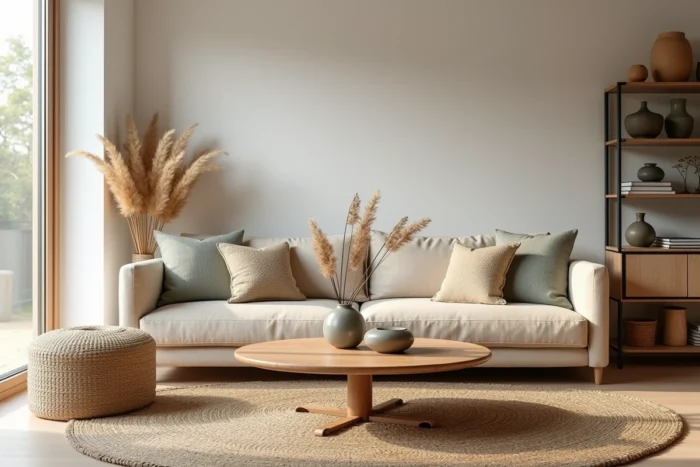
A wall repainted in white, a gray sofa, a few cushions: the foundation is set, but the overall look remains flat. The spark rarely comes from an additional piece of furniture. It comes from a choice of materials, a contrast of textures, or a focus on lighting. Elevating your interior decor is about working on those details that transform a functional room into a space where you love to stay.
Acoustic and tactile materials as key elements of interior decoration
Have you ever noticed how a thick curtain changes the atmosphere of a room beyond the light it filters? This is the effect of so-called “soothing” materials, which absorb sound, alter thermal perception, and add a tactile dimension to the decor.
For a few seasons now, panels made of colored felt or ribbed wood have been designed to be displayed like paintings. They reduce reverberation in an open living room while serving as a visual focal point. Textured fabrics, placed at the head of a bed or on a wall, play the same role in a bedroom.
The idea is simple: a technical material can become a full-fledged decorative element. An acoustic panel no longer needs to be hidden behind a shelf. Chosen in a terracotta or sage green shade, it structures the wall as much as a contrasting paint does. To explore other approaches that combine function and aesthetics, the decoration on the Maisons Euro France website gathers concrete ideas by room and style.
Which materials to choose according to the room
In a living room, wall panels made of felt or wood fiber work well on the wall behind the sofa. They break the echo without weighing down the room. In an office, a textured wall covering (stretched linen, cork) brings visual and sound calm.
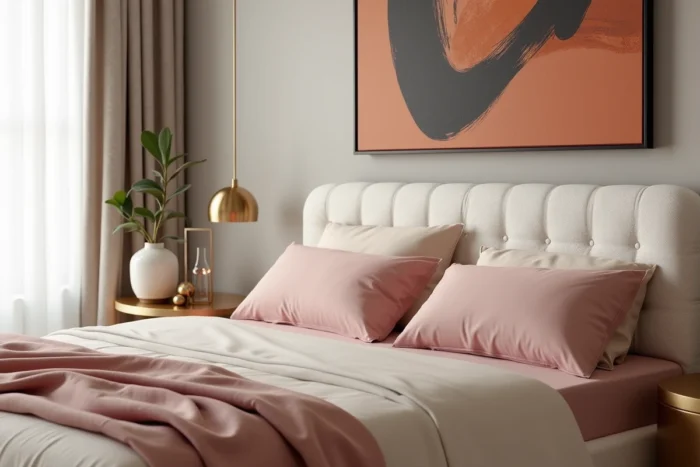
For the bedroom, textiles remain a safe bet. A crumpled cotton gauze bedspread or a boucle wool rug is enough to create a cozy feeling. Texture takes precedence over color to create a soothing atmosphere.
Reversible decoration for renters: trendy decor without drilling
Changing homes every two or three years complicates ambitious decor projects. Drilling a wall to fix a shelf or laying wall tiles in the kitchen risks losing your security deposit.
The market’s response is clear: solutions designed to be removed without leaving a trace. Repositionable wall adhesives, self-adhesive backsplashes, clip-together floors without glue, tension rods without drilling, plug-in lamps with articulated arms.
- Repositionable wall adhesives mimic classic wallpaper, with patterns ranging from terrazzo to Japanese paper, and can be removed without damaging the paint
- Clip-together vinyl or laminate floors can be laid directly over an existing covering and dismantled in a few hours during a move
- Self-adhesive backsplashes (cement tile look, marble, brushed metal) transform a basic kitchen in just a few minutes of installation
Decorating without heavy work no longer means limiting yourself to pinned posters. These products have improved in finish quality and style variety. The result visually holds its own against permanent installations.
Playing with style contrasts in the same space
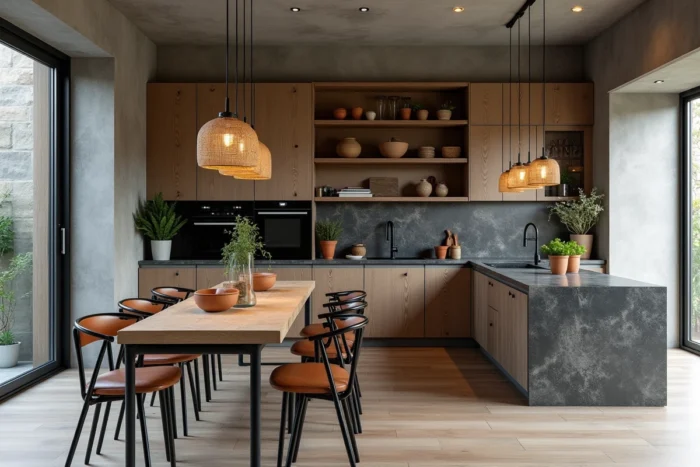
Combining a raw wood table with black metal chairs, or placing an antique mirror above a modern console: this type of contrast gives character to a room. The mix works when it rests on a common thread, often the color palette or the proportion of objects.
Two concrete approaches for a living room or dining room
The first involves starting with a strong piece, such as a solid wood dining table, and surrounding it with lighter elements: wire chairs, a rattan pendant, an open metal sideboard. The heavy piece anchors the room, while the lighter elements lighten it.
The second approach reverses the principle. A neutral and clean base (white walls, simple-lined furniture) welcomes one or two high-personality objects: a vintage velvet armchair, a sculptural lamp, a large stoneware vase. Here, each unique object gains visibility because it does not compete with the rest.
In both cases, limiting the palette to three main shades avoids a cluttered effect. A warm beige, a deep green, and a matte black, for example, are enough to unify a living room where modern design coexists with vintage finds.
Natural and artificial light: the most underestimated decor lever
The same sofa looks dull under a single ceiling light and inviting under three-point lighting. Light alters the perception of colors, volumes, and textures.
- Indirect lighting (LED strip behind a TV unit, floor lamp directed towards the ceiling) visually enlarges the space and softens shadows
- A reading lamp with an adjustable arm, placed near an armchair, creates an intimate corner in a large living room
- Low-hanging pendants above a dining table focus attention on the meal and give perceived height to the rest of the room
Three light sources at different heights transform a room more than a new piece of furniture. This is the first reflex to have before buying anything. Testing the position of a simple clip lamp for a few days allows you to identify dead zones and angles to enhance.
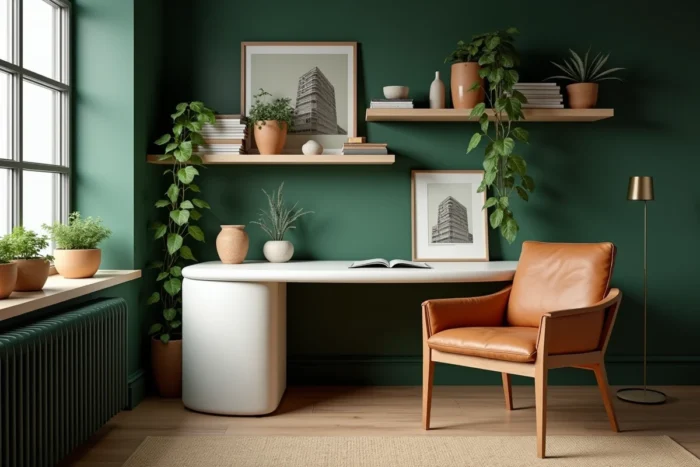
Interior decoration is not just about accumulating trendy objects. A well-placed textured wall panel, a clip-together floor that changes the look of an entryway, a thoughtfully designed three-point lighting scheme: these targeted actions produce a more striking result than a rushed complete makeover. The most effective approach remains to modify one parameter at a time and observe what the room gains before touching the rest.