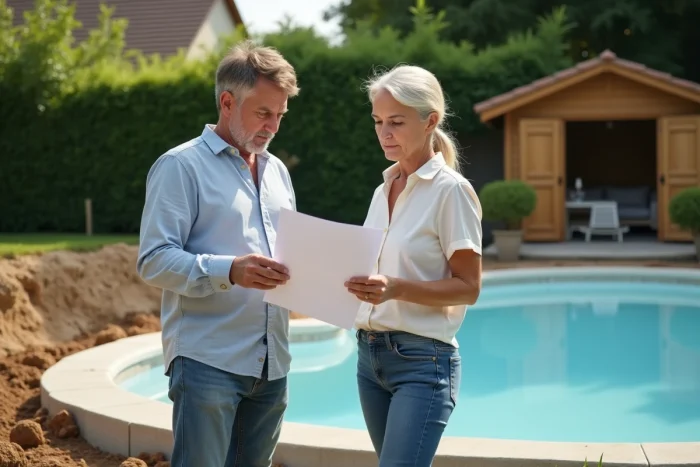
Installing a pool in your garden is never just about a simple desire for an extended summer. In France, even a modest-sized pool almost always comes with an increase in local taxes. The regulations are strict: most pools, whether above ground or in-ground, are treated as permanent constructions as soon as they exceed a certain size. As a result, development tax and property tax come into play as soon as the work is completed.
There are possibilities for exemptions, but they are limited: time-bound, subject to strict conditions, and often poorly understood. Specific procedures must also be followed: everything must be declared within 90 days of the end of the construction, or penalties and administrative hassles may follow. Another point to keep in mind: the method of calculating taxes could still change in 2026.
What to expect with pool taxation in France in 2026?
In France, it is impossible to separate the cost of a pool from the way taxes are applied to the project. As soon as the pool is installed, several taxes come into play: the development tax first, which is due upon completion of the work, then the property tax, and for those with a second home, the residence tax that still persists. The reality? The bill can sometimes be much higher than expected when taking the plunge.
Each municipality has its own rules, and each project comes with its share of surprises. To avoid proceeding blindly, the page pool tax price details the calculations based on surface area, type of pool, or the presence of a cover. This kind of precise resource helps avoid disappointments when the tax notice arrives a few months after the pool is filled.
The fiscal aspect should be anticipated well in advance. Because once the rental value of the property is reassessed upwards, the property tax follows immediately, with no turning back. Considering the tax situation before diving in prevents summer from being cut short due to overlooked taxes.
What taxes and levies apply based on the type of pool?
It is impossible to imagine a pool slipping under the tax authorities’ radar. The administration analyzes each project based on the nature of its construction. Each configuration has its own criteria and tax consequences.
As soon as it comes to an in-ground or semi-in-ground pool, taxation kicks in: the development tax applies, leading to a permanent increase in property tax. Declaration at the town hall is essential, or guaranteed administrative inconveniences will follow.
Above-ground pools sometimes escape this regime, but the reprieve lasts only if the structure remains truly removable and installed for less than three months. Otherwise, the tax applies just like for a masonry pool.
To better understand who is affected and when, here are the most frequently encountered cases:
- Pools less than 10 m²: these small pools generally do not generate any tax declaration or development tax. The administration lets them pass due to the lack of a formal obligation.
- Pools over 10 m²: mandatory declaration at the town hall, immediate taxation regardless of the construction method.
The tax authorities do not care about the material or appearance: only the surface area captures their attention. Installing a cover also counts as a new construction, with a fiscal impact following suit.
Declaration, calculation, and exemptions: how to manage pool tax without stress
As soon as the pool reaches 10 m², a series of formalities must be followed. A prior declaration of work must be submitted to the town hall (Cerfa 13703*08), then the end of the construction must be reported within 90 days using the Cerfa 6704 form. Skipping a step risks not only unpleasant reminders but also unexpected surcharges.
The development tax is calculated based on the surface area of the pool and a fixed rate set each year (274 €/m² outside Île-de-France, 310 €/m² in Île-de-France, according to the 2024 amounts). Each local authority adds its own share, explaining the sometimes significant price differences from one city to another. At the same time, the revaluation of the rental value leads to a notable increase in property tax, a heavy blow for those who were not prepared.
Exemptions and subtleties
Some provisions allow for a reduction in the tax burden related to the pool, provided that the conditions are met. Here are the main possibilities:
- A temporary exemption from property tax for two years is available if the completion declaration is submitted to the town hall within three months following the pool’s delivery.
- For primary residences, the gradual reduction of the residence tax is felt, while second homes still have to bear this additional tax burden.
To avoid unpleasant surprises, regularly consulting impots.gouv.fr is wise: this site gathers everything you need to know about rates and procedures. Anticipating the processes and calculations preserves the enjoyment of the pool once summer arrives, and prevents your dream from drowning in paperwork.
In the end, the pool transforms the outdoor space, promises the best of summers… but every square meter of water has its fiscal echo. Ultimately, the real dive is played out in the reality of the numbers, far more than in the coolness of the pool.